Gunite vs. Fiberglass: Which Pool Holds Up Better in Jacksonville’s Climate?
Blog, Concrete Pools
For most Jacksonville homeowners who want a custom design, gunite is the better long-term choice. Gunite pools are built on site with a steel rebar cage and a thick concrete shell, so they can take any shape, size or depth and stand up well to Northeast Florida’s sandy soil and high water table. Fiberglass pools install faster and need less surface maintenance, but you are limited to the shapes and sizes a manufacturer makes and can ship. Here is how the two compare.
At East Coast Custom Pools, we build premium custom gunite pools for homeowners in Jacksonville and the surrounding communities, so we see firsthand how pool type affects design and long-term ownership.
What Is a Gunite Pool?
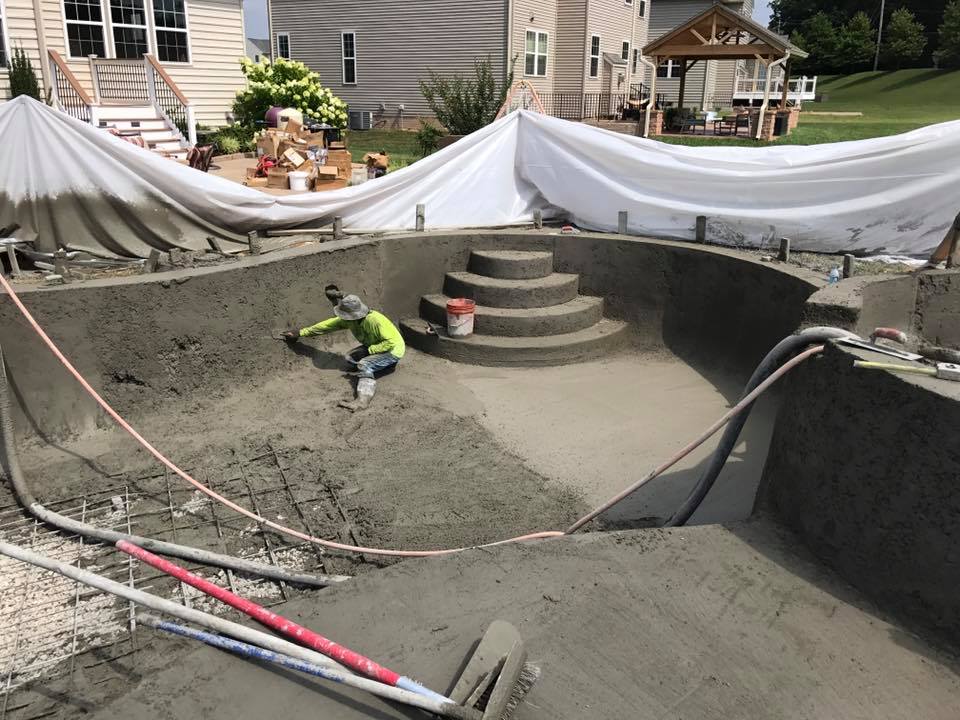
A gunite pool is a concrete pool formed on site. After excavation, crews build a grid of steel rebar in the exact shape of the pool, then spray gunite, a dry concrete mix combined with water at the nozzle, over the rebar to form a solid shell. Once cured, the shell gets waterline tile, coping and an interior finish such as plaster or pebble.
Because it is built in place, a gunite pool can include features like sun shelves, built-in spas, swim-outs, beach entries, raised walls and custom water features. You can see how this comes together in our seven-step custom pool process.
What Is a Fiberglass Pool?

A fiberglass pool is a one-piece shell made in a factory, trucked to your home and set into an excavated hole. The shell has a smooth gelcoat surface. Installation can be quicker because the shell arrives finished, but the pool must be designed around what can travel on a highway, which generally caps width and limits shapes to a manufacturer’s catalog.
Gunite vs. Fiberglass at a Glance
| Factor | Gunite | Fiberglass |
|---|---|---|
| Shape and size | Fully custom, any shape, size or depth | Limited to factory molds; width capped by shipping |
| Built-in features | Sun shelves, spas, swim-outs and water features designed in | Limited to what the mold includes |
| Build time | Longer, since the shell is formed and cured on site | Shorter once the shell is delivered |
| Interior surface | Plaster, quartz or pebble; textured | Smooth gelcoat |
| Surface upkeep | More brushing; periodic resurfacing over the life of the pool | Less brushing; gelcoat is non-porous |
| Structure | Heavy concrete shell with steel rebar | Lighter one-piece shell |
| Upfront cost | Typically higher for comparable size | Often lower for standard shapes |
How Jacksonville’s Climate Changes the Equation
Sandy soil and a high water table
Much of Northeast Florida sits on sandy soil, and many neighborhoods near the St. Johns River, the Intracoastal and local creeks have a high water table. Groundwater pushes up on any inground pool, especially when it is drained for maintenance. A heavier gunite shell, reinforced with steel, gives the structure weight and strength in these conditions. Any pool, gunite or fiberglass, should be built and drained with local groundwater in mind.
Heat, sun and long swim seasons
Jacksonville pools see heavy use from spring through fall and strong UV exposure year-round. Gunite interiors handle this well, and premium pebble finishes are known for durability. Fiberglass gelcoat holds up too, but it can fade or chalk over many years in direct sun.
Hurricane season and coastal air
Pools near the beaches face salt air and storm runoff. Neither pool type is storm-proof, but a properly engineered gunite shell is built for the specific site, including drainage and soil conditions. Many coastal homeowners also pair their pool with a salt system. Our comparison of saltwater vs. chlorine for coastal Florida pools covers that decision.
Long-Term Ownership: What to Expect
With gunite, plan on resurfacing the interior at some point in the pool’s life. Standard plaster often lasts around 10 to 15 years in Florida, while pebble finishes typically last longer. Resurfacing is also a chance to refresh tile, coping and lighting, which is why many owners treat it as an upgrade. Learn more about pool renovation and resurfacing.
Fiberglass usually needs fewer chemicals and less brushing day to day. Over the long term, gelcoat may need repair or refinishing, and the shape you chose on day one is the shape you keep.
Which Is Right for You?
Gunite is usually the right fit if you want:
- A pool designed around your yard, home and lifestyle
- Features like a sun shelf, spa or custom water features built in
- A heavy, reinforced structure suited to sandy, wet Northeast Florida soil
Fiberglass may suit you if you want a standard shape, a faster install and lower day-to-day surface maintenance, and if a catalog design fits your yard.
Gunite vs. Fiberglass FAQs
Is gunite or fiberglass better for Florida?
Both are used in Florida. Gunite is often preferred for custom designs and challenging sites because it is formed on site with steel reinforcement and can fit any shape or depth. Fiberglass offers a faster install and smoother surface but limited design options.
How long does a gunite pool last?
A well-built gunite shell is designed to last for decades. The interior finish is what wears, so most gunite pools are resurfaced periodically over their lifetime.
Why are gunite pools more expensive upfront?
Gunite pools are custom-built on site, with engineering, a rebar cage, the gunite shell, tile, coping and an interior finish. That labor and customization costs more than setting a factory shell, but it buys complete design freedom.
What is the difference between gunite and shotcrete?
Both are sprayed concrete. Gunite is a dry mix with water added at the nozzle, while shotcrete arrives pre-mixed and wet. Both can produce strong pool shells when applied correctly.
Talk to a Jacksonville Gunite Pool Builder
Still deciding? The best way to choose is to see what a custom design could look like in your own backyard. Our in-home consultation includes a 3D design and an itemized proposal, so you can compare with confidence. Learn more about working with a custom pool builder in Jacksonville, call (904) 626-4255, or schedule your consultation.